Posts

Soils

Image
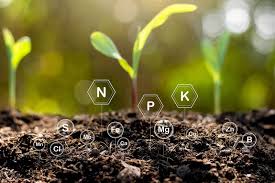
      "The Importance of Soil Health: Nurturing the Foundation of Life" Soil is a vital natural resource that plays a crucial role in supporting life on Earth. It is a complex mixture of minerals, organic matter, water, air, and living organisms. Soils are formed through the weathering of rocks and minerals over long periods of time, and they vary in composition and characteristics depending on factors such as climate, parent material, topography, and biological activity. Soil has several important functions and benefits. It serves as a medium for plant growth, providing nutrients, water, and physical support to plants. Soils also act as a filter and buffer for water, helping to purify and regulate the flow of water through the landscape. Additionally, soil serves as a habitat for countless organisms, including bacteria, fungi, insects, worms, and small animals, which contribute to its fertility and overall ecosystem health.             ...

Submarine Implosions

Image
                "The Thin Line: Surviving Submarine Implosions" Submarine implosion refers to the catastrophic collapse or failure of a submarine's pressure hull due to the external pressure exerted by the surrounding water. This can occur when a submarine dives to great depths or experiences a structural weakness or defect in its hull. When a submarine descends into deep waters, the water pressure increases significantly with depth. Submarines are designed to withstand these pressures and have robust pressure hulls constructed from strong materials like steel or titanium. However, if the submarine exceeds its operational depth limit or encounters a structural flaw, the hull can fail, leading to an implosion.                                                   The implosion of a submarine can be a rapid and violent event. As ...

Coral Reef

Image
                                      Coral Reefs: Jewel of the Ocean A coral reef is an underwater ecosystem composed of diverse communities of coral polyps, algae, and other marine organisms. Coral reefs are formed by the accumulation of the exoskeletons of corals, which are small animals belonging to the class Anthozoa.                              Corals are colonial organisms that secrete a calcium carbonate skeleton, creating intricate structures known as coral reefs. They are typically found in warm, shallow waters with clear visibility, as they rely on sunlight for photosynthesis. Coral reefs can be found in tropical and subtropical regions around the world, particularly in the Pacific Ocean, Indian Ocean, and the Caribbean Sea. Coral reefs are known for their high biodiversity and provide essential habitats for...

Manufacturing of Paper

Image
Optimizing the Paper Manufacturing Process: Strategies for Cost Reduction and Efficiency The manufacturing of paper typically involves several stages, including preparation of raw materials, pulping, papermaking, and finishing. Here's a general overview of the paper manufacturing process: Raw Material Preparation: The primary raw material used for paper production is wood pulp, which can be obtained from different sources such as trees, recycled paper, or agricultural fibers like bamboo or bagasse. The raw materials are collected, sorted, and prepared for further processing. Pulping: In this stage, the raw materials are processed to separate the cellulose fibers from other impurities. There are two primary pulping methods: a. Mechanical Pulping: Involves grinding the raw material to separate the fibers mechanically. This method retains a higher percentage of the lignin present in the wood, resulting in a stronger paper but with lower brightness. b. Chemical Pulping: Involves treat...

Mathematics

Image
Mathematics is a field of study that deals with numbers, quantities, structures, patterns, and their relationships. It encompasses various branches and subfields that explore different aspects of mathematical concepts and applications. Here's some information about Mathematics: P ure Mathematics : Pure Mathematics focuses on the study of abstract mathematical concepts and structures, often with no direct application to the real world. It includes areas such as algebra, calculus, geometry, number theory, and logic. A pplied Mathematics : Applied Mathematics utilizes mathematical techniques and principles to solve real-world problems and address practical applications in other disciplines. It involves areas such as mathematical modeling, optimization, statistics, computational mathematics, and mathematical physics. Algebra : Algebra deals with the study of mathematical symbols and the rules for manipulating these symbols to solve equations and understand mathematical structures. It i...

Genetics and Molecular Biology

Image
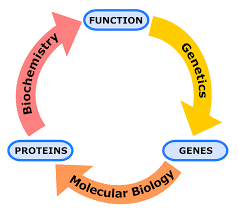
Genetics and Molecular Biology are closely related fields that focus on the study of genes, heredity, and the molecular mechanisms that govern biological processes. Here's some information about each field: Genetics : Genetics is the study of genes, heredity, and the variation of inherited traits in living organisms. It involves the understanding of how genes are passed from one generation to another and how they contribute to the development and functioning of organisms. Key aspects of genetics include: Mendelian Genetics: Mendelian genetics explores the principles of inheritance based on the work of Gregor Mendel. It involves studying traits, alleles, genotype, phenotype, Punnett squares, and genetic crosses. Molecular Genetics : Molecular genetics focuses on the study of genes at the molecular level. It involves understanding the structure and function of genes, DNA replication, transcription, and translation processes. Population Genetics : Population genetics examines the gen...

Computer Science is the study of computers and computational systems

Image
Computer Science is a field of study that encompasses the theory, design, development, and application of computer systems. It involves the study of algorithms, programming languages, data structures, computer architecture, software engineering, artificial intelligence, and more. Computer Science is a rapidly evolving discipline that impacts various aspects of technology and society. Here are some key aspects and topics within Computer Science: Algorithms and Data Structures : Study the design and analysis of algorithms, which are step-by-step procedures for solving computational problems. Explore data structures, such as arrays, linked lists, trees, graphs, and hash tables, which organize and store data efficiently. Programming Languages : Learn different programming languages, their syntax, semantics, and paradigms. Understand concepts like variables, control structures, functions, object-oriented programming, and concurrent programming. Software Engineering : Focus on the principles...